Is your crawl space just a forgotten, dusty, or even damp part of your home? For lots of homeowners right here in Cibolo, it's totally out of sight, out of mind. But honestly, ignoring what's happening down there can really hit your wallet hard on energy bills and even mess with your home's air quality. When it comes to insulating that space, you've generally got two main ways to go: the old-school batt insulation or a more modern, complete encapsulation.
Batt Insulation: The Old Way
You know batt insulation, right? It's usually those pink or yellow rolls of fiberglass or rock wool that get stapled up between your floor joists. It's been around forever, and yeah, it's generally the cheapest option upfront. You can snag it at pretty much any hardware store, and it's fairly simple to put in if you're a bit handy.
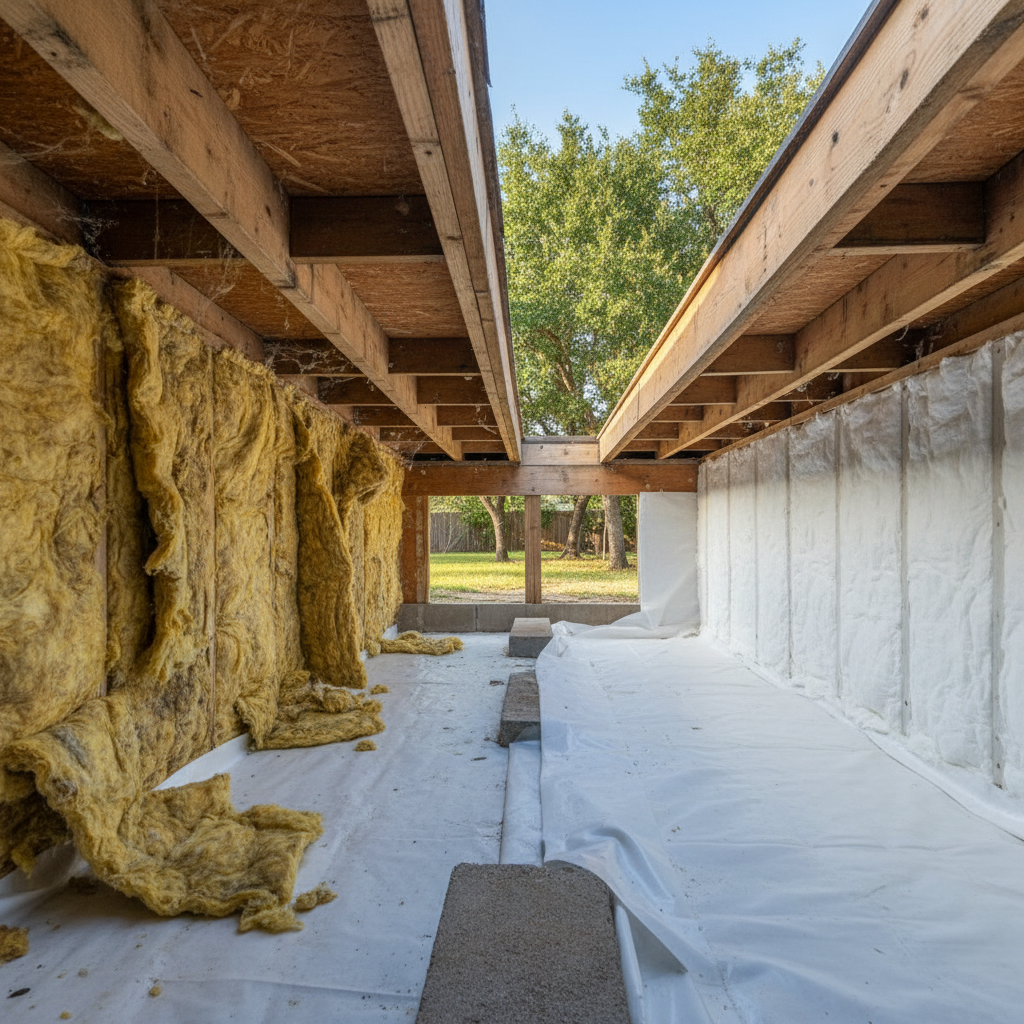
Here's the real scoop with batts in a crawl space, especially in a muggy climate like ours: they just don't like moisture. Fiberglass and rock wool are supposed to slow down heat transfer, but if they get wet, they lose a ton of their R-value. And let's be real, down in a crawl space, moisture is a constant battle. We get plenty of humidity, and if you've got any ground moisture or even a tiny plumbing leak, those batts can turn into a soggy mess. Once they're wet, they can sag, fall right down, and even become a cozy spot for mold and mildew. Believe me, you don't want that stuff floating up into your living space.
Durability? If they stay dry and nobody bothers them, they'll last. But if they get wet, or if some critters decide to make a home in them, their lifespan and how well they work drop big time. Maintenance is mostly about checking for moisture or damage, which, let's be honest, most folks aren't doing regularly in their crawl space. Appearance-wise, well, it's a crawl space, so who really cares, right? But if those batts are falling down, it looks pretty awful.
Crawl Space Encapsulation: A Newer Approach
Okay, now let's talk about encapsulation. This isn't just about insulation; it's about sealing off and conditioning the whole crawl space. The process usually involves a few key steps:
- Vapor Barrier: We lay a tough, reinforced polyethylene liner across the ground and seal it up the foundation walls, often right to the top. This stops ground moisture from evaporating into the crawl space.
- Insulation: Instead of just insulating the subfloor, we typically insulate the perimeter foundation walls. We often use rigid foam boards or closed-cell spray foam for this. These materials don't soak up moisture and create a continuous thermal barrier.
- Sealing Vents: Any open crawl space vents get sealed off. This keeps outside humidity and unconditioned air from sneaking in.
- Dehumidification/Conditioning: Often, we'll put in a dedicated dehumidifier, or sometimes the crawl space gets hooked into your home's HVAC system to keep the air dry and consistent.
The upfront cost for encapsulation is definitely higher than just shoving some batts in there. No two ways about that. But think about the long-term benefits. You're creating a dry, conditioned space right under your home. That means no more damp, musty smells, way less chance of mold, and a much tougher time for pests to settle in. The rigid foam or spray foam insulation we use for the walls is incredibly durable, won't sag, and moisture doesn't bother it one bit. It's really built to last for the life of your home.
Maintenance is pretty minimal once it's done right. You'll want to check on your dehumidifier if you have one, and maybe occasionally peek at the vapor barrier for any punctures, but that's about it. The appearance is much cleaner and brighter, which actually makes any future inspections or repairs a lot easier.
My Recommendation for Cibolo Homes
Given our hot, humid summers and the clay soils we often deal with around here — which, as you know, can hold moisture and really ramp up the humidity — I almost always lean towards crawl space encapsulation. Yes, it's a bigger investment initially. But you're not just insulating; you're solving moisture problems, making the air in your home healthier, and drastically cutting down the workload on your HVAC system. That translates to real savings on your energy bills, year after year.
With encapsulation, your floors will feel warmer in the winter and cooler in the summer, and you won't have to worry about moldy, sagging insulation. It's a complete solution that tackles the root causes of crawl space issues, not just the symptoms. For a long-term, durable, and effective solution that truly makes your Cibolo home more comfortable and energy-efficient, encapsulation is the clear winner in my book. We've seen it make a huge difference for folks, and it's what we recommend at Heritage Insulation Solutions when we're looking to provide lasting comfort and savings.