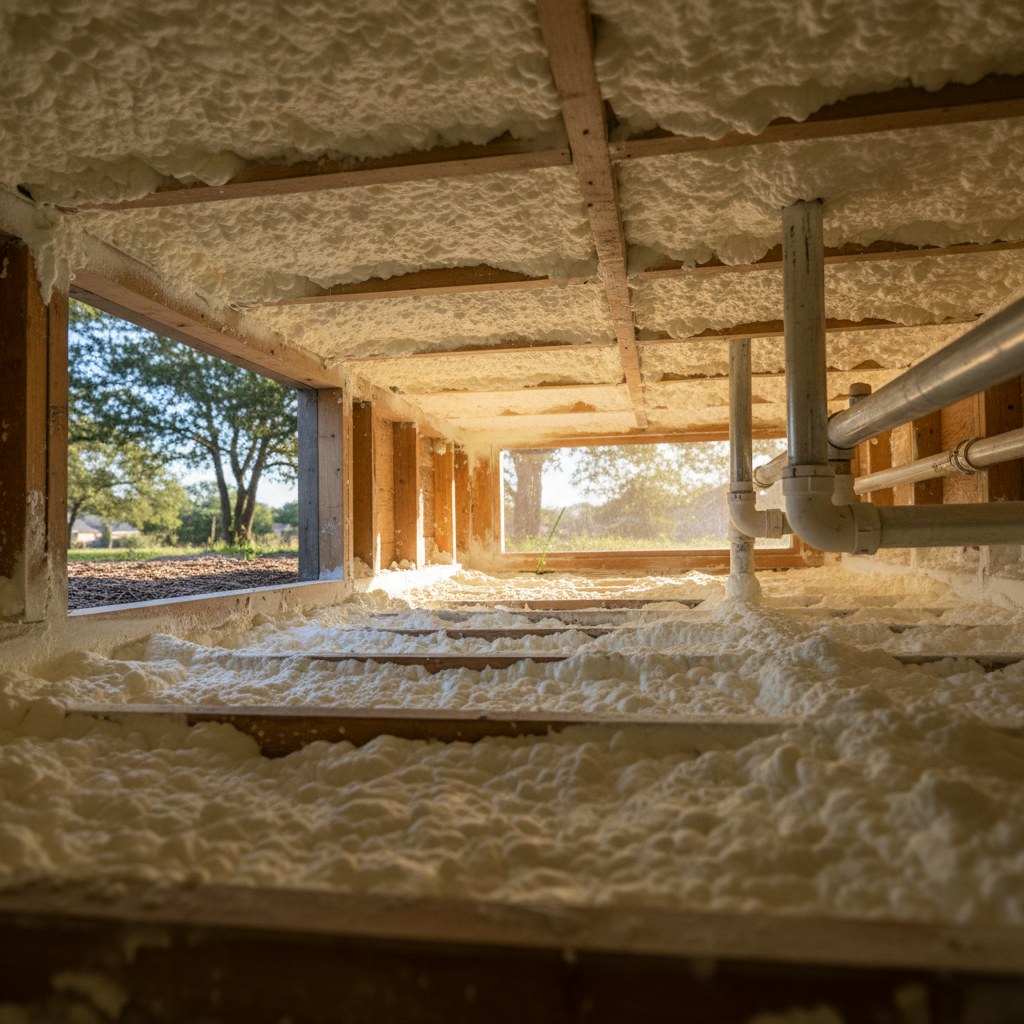
You’ve got a crawl space, and you’re probably wondering what’s the deal with insulating it. It’s a common question around here, especially with our hot, humid summers and those occasional cold snaps. I get a lot of the same questions from folks in Cibolo, so I figured I’d just lay out some honest answers for you.
Why bother insulating a crawl space at all?
Look, your crawl space isn’t just dead air under your house. No, it’s actually a huge factor in your home’s energy efficiency and how comfortable it feels. Think about it: that space is directly exposed to the ground and the outside air, even if it’s vented. If it’s not insulated properly, all that heat in the summer, or cold in the winter, just seeps right up into your floors and walls. What does that mean for you? Your HVAC system has to work overtime, costing you more on your utility bills. Plus, it can make your floors feel absolutely freezing in January or your whole house feel muggy in August. It’s not just about saving money; it’s about making your home a lot more comfortable to live in, period.
What's the deal with vented vs. unvented crawl spaces?
This is a big one, and it’s where a lot of older homes in Cibolo run into trouble. For years, the thinking was you needed to vent your crawl space to let moisture out. The problem is, especially here in South Texas, those vents often let in more humid air than they let out. So, in the summer, you’re basically just inviting a bunch of hot, damp air under your house, which can lead to condensation, mold, and rot. An unvented, or sealed, crawl space is generally what I recommend now. We close up those vents and insulate the walls and floor of the crawl space itself, making it part of your home’s conditioned envelope. This keeps out the humidity, stabilizes the temperature, and just makes everything work better. It really is a game-changer for air quality and energy bills.
Can I just put insulation between the floor joists?
You can, and that’s how a lot of older homes are done, usually with fiberglass batts. But honestly, it’s often not the best solution for a crawl space, especially a vented one. When you put insulation up against the subfloor, you’re still leaving the crawl space itself exposed to the elements. Those batts can sag, get wet, become a home for pests, and lose their effectiveness pretty quickly. If you have a vented crawl space, insulating the subfloor means you’re essentially insulating the floor *above* an unconditioned, humid space. It’s better to treat the crawl space as part of your home’s envelope. If you’re going to insulate between the joists, you really need to make sure the crawl space is dry and sealed first. Even then, there are better ways to do it.
What kind of insulation is best for a Cibolo crawl space?
For most crawl spaces, especially if we’re sealing them up, I lean towards rigid foam boards or closed-cell spray foam on the crawl space walls and rim joists. These materials don’t absorb moisture, they provide a great air seal, and they have excellent R-values. For the ground, a heavy-duty vapor barrier is non-negotiable. It’s not insulation itself, but it keeps ground moisture from ever becoming an issue. We often pair that vapor barrier with some rigid insulation on top of it for extra thermal performance. Fiberglass batts can work if they're installed perfectly and kept dry, but they're just not as tough or foolproof in a crawl space environment. The clay soils we have around Cibolo, for example, can hold a lot of moisture, making a robust vapor barrier and moisture-resistant insulation even more critical.
Do I need a vapor barrier, and where does it go?
Absolutely, 100% yes, you need a vapor barrier. This isn’t optional. The ground under your house is constantly releasing moisture, even if it doesn’t look wet. That moisture will rise, condense on cooler surfaces, and cause all sorts of problems like mold, mildew, and wood rot. A thick, durable vapor barrier (at least 10-mil, but 12 or 20-mil is better) covers the entire floor of your crawl space, overlapping seams, and extending up the foundation walls. It needs to be properly sealed at all seams and penetrations. This barrier is your first line of defense against ground moisture, and it’s critical for any effective crawl space insulation system. Without it, you’re just asking for trouble, plain and simple.
What about moisture and humidity control in a sealed crawl space?
Once you seal up a crawl space, you’ve cut off the outside air, which is great for keeping out humidity. But you still need to manage any moisture that might get in or that’s already there. That’s where a good dehumidifier comes in. It’s not always necessary, but for many homes, especially if there were existing moisture issues, a properly sized, dedicated crawl space dehumidifier is a smart investment. It’ll keep the humidity levels in check, usually below 50-55%, preventing mold growth and protecting your home’s structure. Sometimes, we might also recommend a small exhaust fan or a connection to your home's HVAC return, but a dehumidifier is usually the most straightforward solution for ongoing humidity control. It’s all part of creating a truly healthy and energy-efficient crawl space.
How long does crawl space insulation last?
This really depends on the material and how well it's installed. Fiberglass batts, if they stay dry and undisturbed, can last a long time, but they're prone to sagging, getting wet, or being damaged by pests, which significantly reduces their lifespan and effectiveness. Rigid foam boards and spray foam, on the other hand, are much more durable. Once they're in, they're not going to sag, absorb moisture, or usually attract pests. A properly installed vapor barrier should last for decades. When Heritage Insulation Solutions does a job, we’re using materials and techniques designed to last the life of your home. It’s an investment, so you want it to be a long-term solution, not something you have to worry about again in a few years, right?
Will insulating my crawl space really save me money?
Yes, it absolutely will. I see it all the time. By creating a conditioned space under your home, you’re stopping all that heat transfer that makes your HVAC system work so hard. Your furnace and AC won’t have to run as often or as long, which means lower utility bills. Beyond that, you’ll likely see fewer issues with moisture, mold, and pests, which can save you a fortune in repairs down the line. Plus, your home will just feel better – more consistent temperatures, less humidity, and better air quality. It’s one of those home improvements that pays for itself over time, both in hard cash and in comfort.