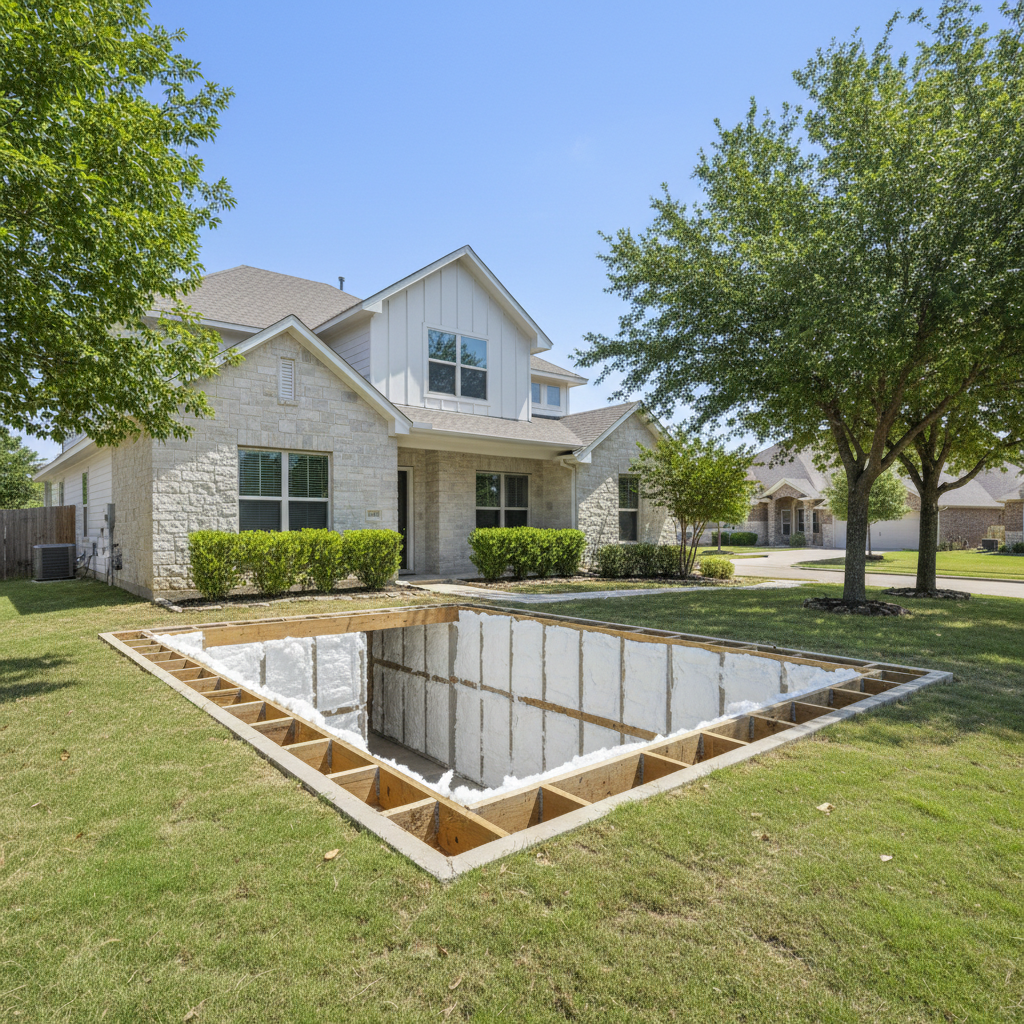
Alright, let's talk basements. Now, I know what you're thinking: basements aren't exactly common in Cibolo, TX. And you'd be right, for the most part. Most homes around here, especially in neighborhoods like Saddle Creek Ranch or those newer builds off FM 78, are built on slab foundations. But every now and then, you run into a home with a basement or a crawl space that's practically a mini-basement. Or maybe you're converting a space and suddenly, insulation becomes a real head-scratcher.
Why Bother with Basement Insulation in Texas?
You might figure, 'It doesn't get that cold, why insulate a basement?' That's a fair question. But it's not just about keeping warmth in during winter. It's about a whole lot more, especially with our Texas climate.
- Humidity Control: This is huge. Our summers are brutal, and the humidity can be a killer. An uninsulated basement or crawl space is a magnet for moisture. That leads to mold, mildew, and a generally unhealthy environment. Proper insulation, especially something like closed-cell spray foam, acts as a vapor barrier, keeping that dampness out of your living space.
- Energy Efficiency: Even if it's not freezing, your basement walls are still exposed to the ground temperature. In summer, the ground is cooler than the air, but in winter, it's warmer. Without insulation, you're constantly losing or gaining heat through those walls, making your HVAC system work overtime. That's money out of your pocket.
- Comfort: Ever been in a room above an uninsulated basement? It can feel drafty, cold, or just plain clammy. Insulating down there makes the whole house more comfortable, top to bottom.
- Pest Control: While not its primary job, a well-sealed and insulated basement or crawl space is less inviting to critters looking for a way in. They prefer easy access and damp, dark places.
What Kind of Insulation Works Best?
This isn't a one-size-fits-all situation. The best approach depends on your specific basement or crawl space, what you're using it for, and what kind of budget you're working with. But I can tell you what I've seen work well around here.
- Spray Foam: For basement walls, especially if you're finishing the space, closed-cell spray foam is tough to beat. It adheres directly to the concrete, creates an incredible air and vapor barrier, and has a high R-value per inch. It's an investment, but it pays off in spades for comfort and energy savings.
- Rigid Foam Boards: These are another solid option for basement walls. They're easy to install, provide good insulation, and don't absorb moisture like some other materials. You often see these paired with a stud wall and drywall over top.
- Batt Insulation (Fiberglass or Mineral Wool): If you're insulating the ceiling of an unfinished basement (to separate it from the living space above), batts can work. But for the walls themselves, especially against concrete, you need something that can handle potential moisture better.
One thing I've noticed with our clay-rich soil here in Cibolo is how much it can hold moisture. That means any concrete foundation is constantly wicking moisture from the ground. You need insulation that can stand up to that, not just absorb it and become a problem. That's why I lean heavily towards materials that also act as a moisture barrier.
Why Local Expertise Matters for This Kind of Work
You might think insulation is just insulation, no matter where you are. But that's not how it works. Knowing the local conditions – the climate, the soil types, common construction practices in older homes versus new ones – makes a huge difference in recommending the right solution. I've been doing this for years, and I've seen what works and what doesn't work specifically for homes in our area.
A contractor from out of state or even just a different part of Texas might not understand the specific challenges we face with heat, humidity, and our particular ground conditions. You need someone who knows that a 'dry basement' here still means dealing with significant moisture challenges compared to, say, Arizona.
When you're looking at something as important as your home's foundation and energy envelope, you want someone who understands the nuances of Cibolo construction. We're not just throwing up insulation; we're creating a barrier that protects your home and your wallet for years to come. If you've got a basement or a substantial crawl space and you're wondering about the best way to insulate it, give Heritage Insulation Solutions a call. We're right here, and we know our stuff when it comes to keeping your home comfortable and efficient.